
SYDNEY, NSW – 19 Aug, 2026 – The latest lending figures confirm what many in the industry have sensed since the May federal budget: investors are stepping back from the broader market, but the pullback is far from uniform. Newly built homes and construction loans are attracting a growing slice of the remaining investor activity — exactly the outcome the budget measures were designed to encourage.
Australian Bureau of Statistics data for the June quarter 2026 show the number of new investor loan commitments fell 8.6 per cent compared with the March quarter. That was the sharpest quarterly drop since September 2022. Owner-occupier loans also declined (down 3.3 per cent) and first-home buyer commitments eased 2.9 per cent, leaving total new dwelling loans 5.4 per cent lower overall.
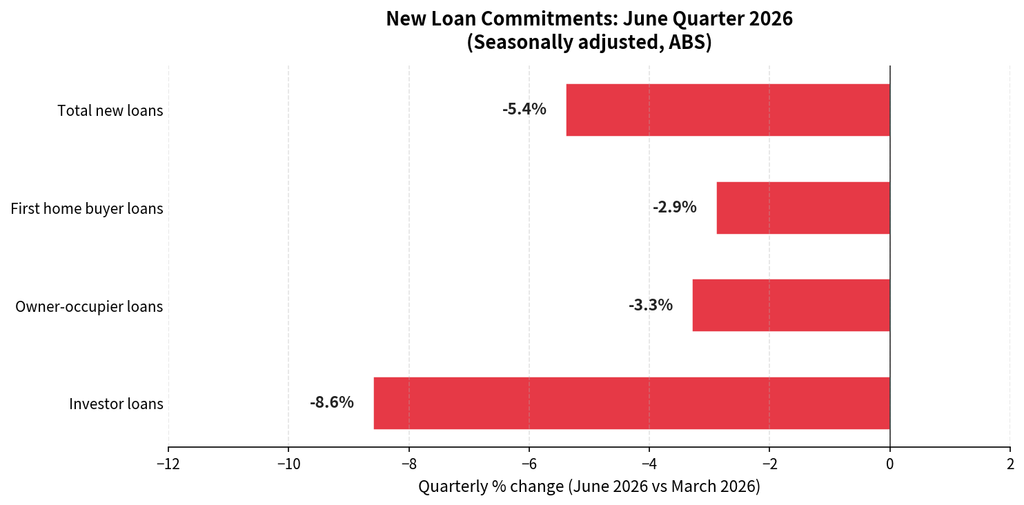
Higher interest rates had already begun cooling investor appetite earlier in the year, so the budget was not the sole driver. Still, the timing and the composition of the decline point to the tax changes having an effect. Negative gearing on established properties bought after budget night (12 May 2026) will be restricted from 1 July 2027, while new builds remain fully eligible. Capital gains tax rules are also being rewritten, again with a carve-out that favours newly constructed dwellings.
While traditional buyer agents charge $15,000–$40,000+, We evaluate hundreds of key data points — historical sales, listings, location metrics, and land details — to give you confident, high-return buying decisions. Don’t overpay for expertise!
Unlock expert property buying advice report for FREE (real $0). Start your Buyer Brief now!
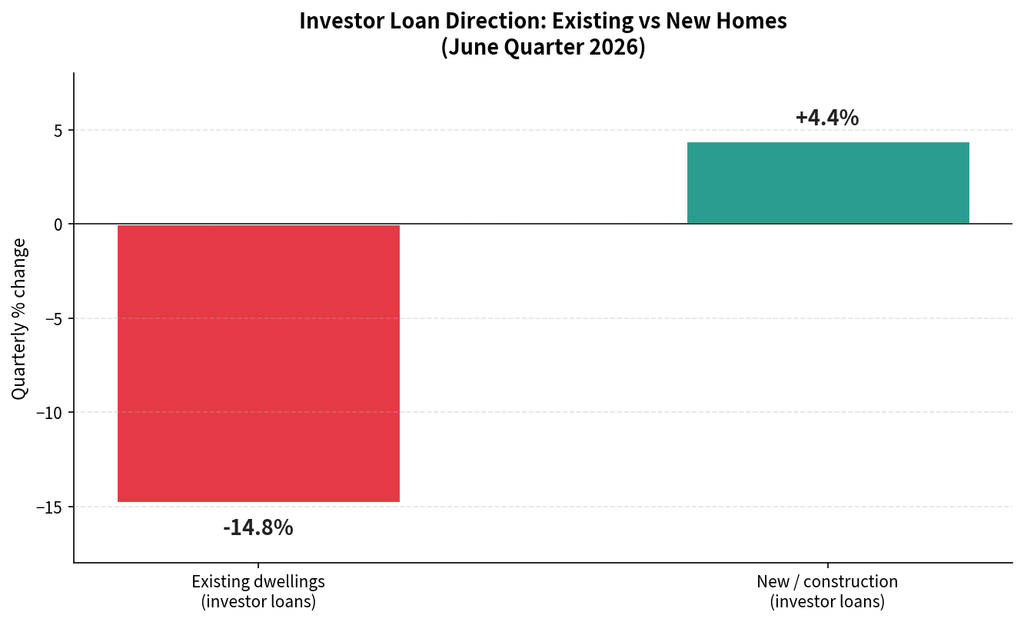
The result is a clear divergence within the investor segment. Loans for the purchase of existing homes fell sharply — reports put the decline for established properties at around 14–15 per cent in the quarter — while loans for construction or newly completed homes rose. Investor construction loans reached a record high for the current ABS series (data back to 2019), with more than 8,400 commitments in the June quarter alone.
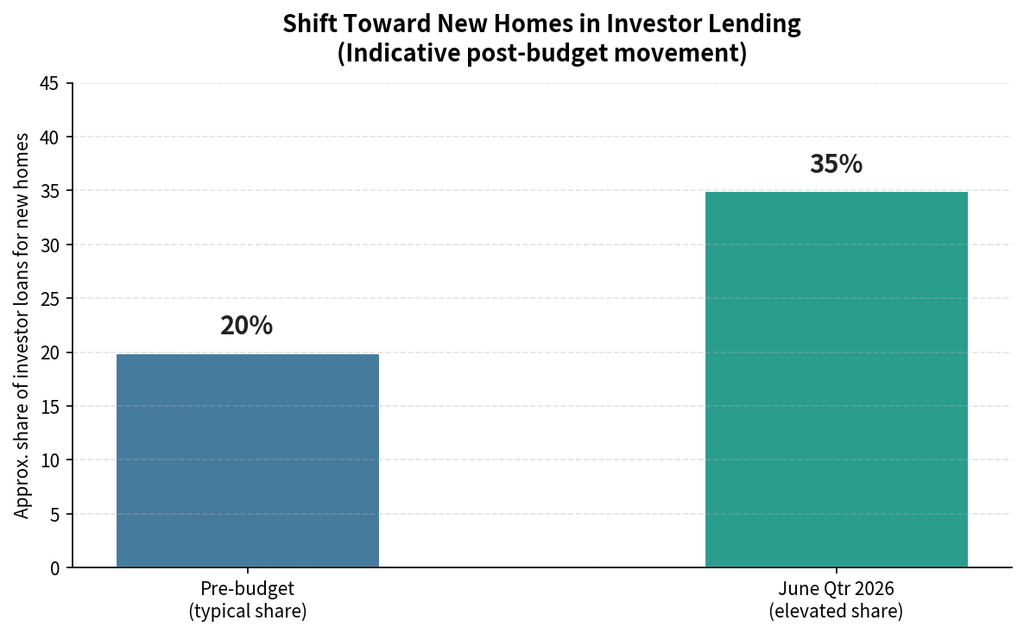
That pivot lifted the share of investor loans directed toward new housing. Pre-budget, new dwellings typically accounted for a relatively modest portion of investor lending. By the June quarter the proportion had moved higher — a meaningful shift even if it is still early days and the data partly cover the pre-budget period.
The policy intent is straightforward: redirect investor capital toward additional housing supply rather than bidding up prices on existing stock. Australia remains well short of the National Cabinet target of 1.2 million homes over five years, so any sustained lift in new-build demand would be welcome. Whether the early rebound in construction lending continues will be one of the key stories to watch through the rest of 2026 and into 2027.
It is still early. Loan-commitment data lag actual buyer behavior, and roughly half the June-quarter period predates the budget announcement. Sentiment, further rate decisions and the practical realities of building costs and delivery timelines will all influence how far the shift travels. For now, the message from the numbers is clear: investors have not abandoned the market, but they are becoming more selective — and newly built homes are the relative winners.