
SYDNEY, NSW – 21 Aug, 2026 – Falling property prices have sparked fresh questions about the risks facing recent first-home buyers who entered the market with just a 5 per cent deposit. The short answer from the latest analysis is reassuring for the vast majority: very few are currently in negative equity.
Since the federal government’s 5% Deposit Scheme (formerly the Home Guarantee Scheme) was expanded in October 2025 — removing income caps and lifting place limits — roughly 48,000 properties have been purchased under the program, according to Housing Australia data released under freedom of information. PropTrack analysis of those purchases against subsequent price movements shows only around 87 of those households are presently in negative equity. That equates to less than 0.2 per cent of the cohort.
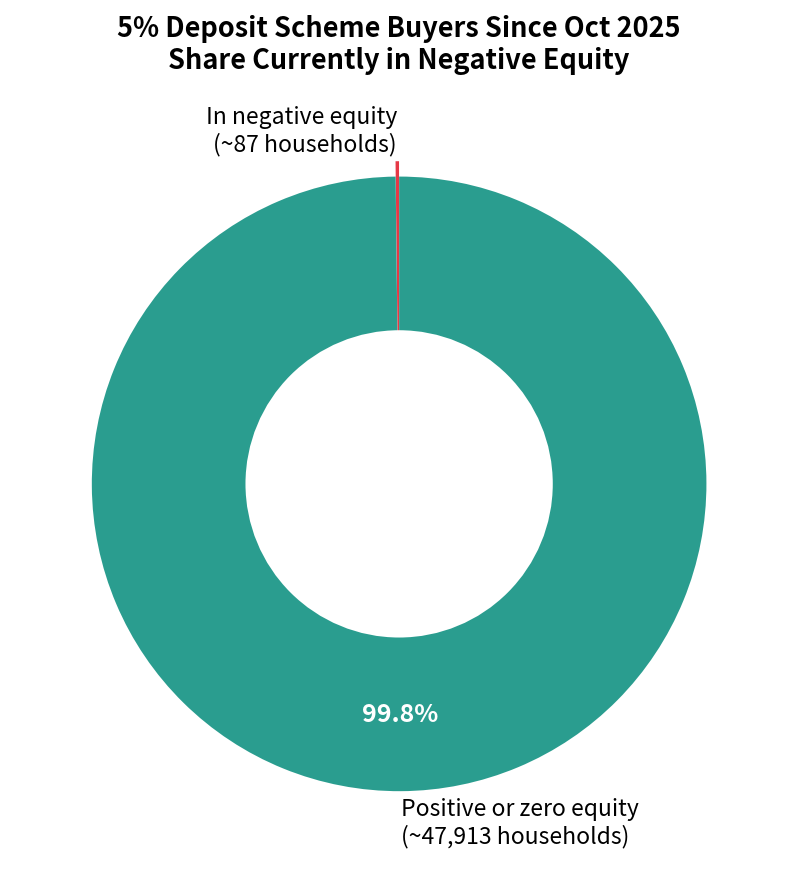
The small number of cases sit almost entirely in the markets that have seen the sharpest price falls since rates began rising earlier this year — principally Sydney’s eastern suburbs and Melbourne’s inner-east. Even there, the absolute numbers remain low because relatively few scheme users bought in those higher-priced pockets.
While traditional buyer agents charge $15,000–$40,000+, We evaluate hundreds of key data points — historical sales, listings, location metrics, and land details — to give you confident, high-return buying decisions. Don’t overpay for expertise!
Unlock expert property buying advice report for FREE (real $0). Start your Buyer Brief now!
Most buyers still hold more equity than their original deposit
Looking across the full group of post-expansion purchasers, 52 per cent currently have equity greater than the 5 per cent deposit they contributed. In other words, the majority of these first-home buyers have seen the value of their property rise (or at least hold) enough to more than offset the thin equity buffer they started with.
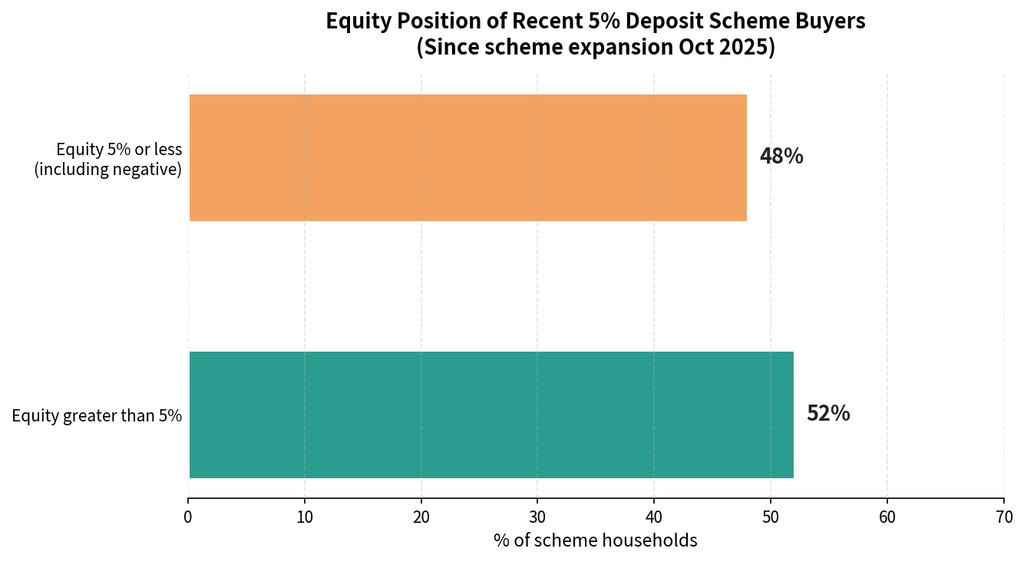
This outcome has been helped by a clear divergence in market performance. Affordable properties — the segment most scheme buyers target because of the price caps — have generally held up better than the top end of the market. Demand brought forward by the scheme itself has supported prices at the lower and middle price points in many capitals and regions, creating a buffer that pure market dynamics alone might not have delivered.
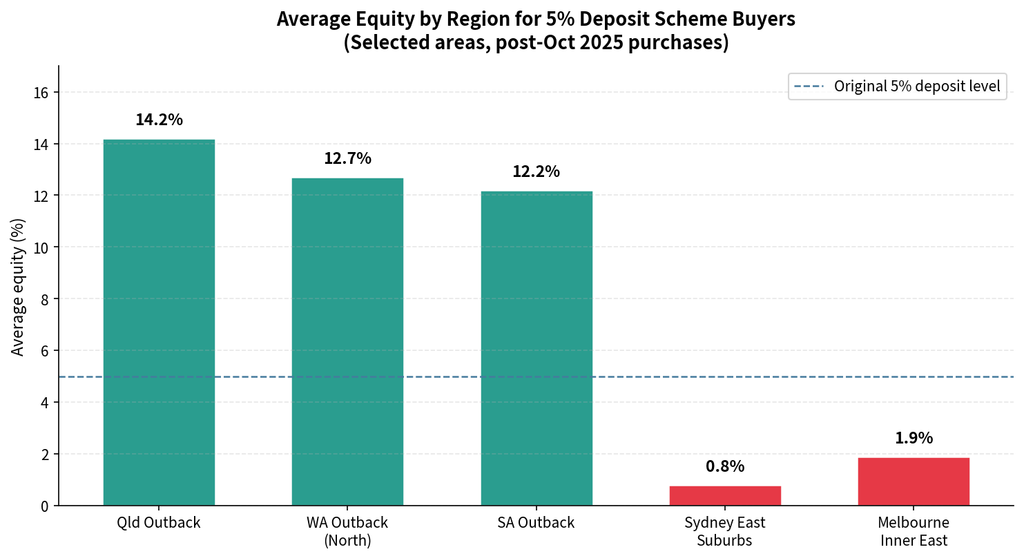
Regional markets have been particularly supportive. Average equity among scheme buyers in Queensland’s outback, Western Australia’s northern outback and South Australia’s outback sits well into double digits. By contrast, the thinnest equity cushions appear in the expensive inner and eastern pockets of Sydney and Melbourne.
Does negative equity automatically mean trouble?
Being in negative equity is never ideal. It limits refinancing options and makes selling more complicated if circumstances change. However, for most owner-occupiers it only becomes a live problem if they fall behind on repayments and the lender is forced to act. Australian banks rarely move to force a sale solely because a loan exceeds the current property value; the legal and practical costs are high.
APRA data to March showed arrears remaining low across the system. Provided scheme buyers continue to service their loans, the short-term implications for households, the housing market and the broader economy appear limited. The analysis also excludes offset account balances, so many households will have an additional cash buffer not captured in the pure equity figures.
Looking ahead
Further price softness remains possible while interest rates stay elevated and investor activity adjusts to the recent tax changes. If declines deepen or spread more widely into the affordable segments, the number of scheme buyers with equity below 5 per cent could rise. For now, though, the data show the expanded 5% Deposit Scheme has not produced the wave of negative equity some feared.
The scheme has accelerated entry for tens of thousands of first-home buyers by shortening the deposit-saving period and removing the need for lenders’ mortgage insurance. That benefit has come with higher leverage. The early evidence suggests most of those buyers remain protected by the relative resilience of the price points they purchased in — a useful reminder that not all parts of the housing market move in lockstep.